



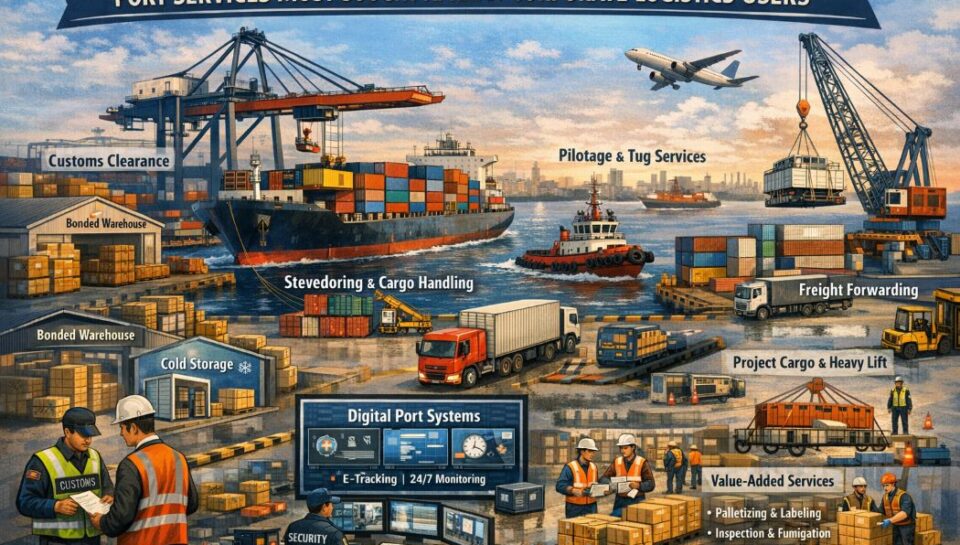
Port Services Most Sought After by Corporate Logistics Users
In today’s highly competitive global trade environment, ports are no longer just transit points—they are integrated logistics ecosystems. For companies engaged in import, export, manufacturing, energy, retail distribution, and large-scale infrastructure projects, efficient port services are critical to maintaining smooth supply chains and controlling operational costs.
As an archipelagic nation and one of the busiest maritime regions in Southeast Asia, Indonesia relies heavily on port operations managed by entities such as PT Pelabuhan Indonesia (Pelindo), alongside private port service providers and terminal operators. However, regardless of geography, the core needs of corporate port users remain largely consistent worldwide.
This article explores the most in-demand port services sought by companies, the operational priorities behind those demands, and the opportunities for port service providers to strengthen their competitive position.
1. Stevedoring and Cargo Handling Services
Why It Matters
Stevedoring—the loading and unloading of cargo from vessels—is the backbone of port operations. For corporate clients, time is money. Delays in cargo handling can result in:
- Demurrage charges
- Detention fees
- Production downtime
- Supply chain disruptions
What Companies Look For
Corporate users prioritize:
- High crane productivity rates
- Minimal cargo damage
- Skilled labor and certified operators
- Strict adherence to vessel schedules
- Real-time operational reporting
Industries such as automotive manufacturing, FMCG, mining, and construction materials heavily depend on efficient stevedoring to meet tight delivery deadlines.
2. Container Terminal Services
Containerization dominates global trade. Therefore, container terminal efficiency is one of the most critical services sought by companies.
Key Services in Demand
- Container loading and unloading
- Container stacking and yard management
- Reefer container plugging and temperature monitoring
- Container repair and maintenance
- Empty container depot services
Companies handling perishable goods (food, pharmaceuticals, chemicals) require real-time temperature monitoring and uninterrupted reefer power supply. Meanwhile, exporters and importers of manufactured goods demand fast gate-in and gate-out processes.
Performance Indicators Companies Monitor
- Container dwell time
- Truck turnaround time
- Yard congestion levels
- Digital booking system availability
Ports offering automated yard management systems and digital container tracking gain a significant advantage in attracting corporate clients.
3. Warehousing and Storage Solutions
Not all companies maintain their own warehouses near ports. This makes port-based storage facilities highly attractive.
Most Requested Storage Services
- General warehousing
- Bonded warehouses
- Cold storage facilities
- Bulk cargo storage
- Cross-docking facilities
- Distribution centers
What Corporate Clients Expect
- 24/7 access
- Advanced inventory management systems
- Integrated customs documentation
- CCTV surveillance and controlled access
- Flexible storage contracts
For companies importing raw materials for production, bonded warehouses are especially important as they allow goods to be stored without immediate payment of duties.
4. Customs Clearance and Documentation Services
Customs processes are often the most sensitive stage in international logistics. Even minor documentation errors can delay shipments for days.
Highly Demanded Services
- Import and export documentation handling
- Customs duty and tax calculation
- Regulatory compliance advisory
- Physical inspection coordination
- HS code classification support
Companies seek port service providers or partners that understand customs regulations thoroughly and can expedite clearance processes. Efficiency in this area significantly reduces storage costs and supply chain risks.
5. Marine Services (Pilotage, Towage, and Mooring)
Before cargo operations begin, vessels require marine assistance to safely enter, berth, and depart from ports.
Essential Marine Services
- Pilotage
- Tugboat services
- Mooring and unmooring
- Vessel traffic management
Shipping companies prioritize:
- Rapid response time
- Availability of modern tugboats
- High safety standards
- Professional marine crews
Efficient marine services directly impact berth productivity and vessel turnaround time—two critical performance metrics for global shipping lines.
6. Freight Forwarding and Multimodal Logistics
Many companies prefer integrated logistics solutions rather than coordinating multiple vendors. Freight forwarding services that connect port operations with inland transport are highly sought after.
Services in High Demand
- Door-to-door logistics
- Multimodal transportation (sea–land–air)
- Cargo insurance
- Inland trucking and rail coordination
- Shipment tracking systems
Corporate users increasingly favor port service providers that offer end-to-end solutions. This reduces administrative workload and enhances supply chain visibility.
7. Digital Port Systems and Automation
Digitalization has become one of the strongest drivers of competitiveness in port services.
Most Requested Digital Features
- E-booking systems
- Online billing and payment
- Electronic documentation
- Real-time cargo tracking
- Integrated dashboards for performance monitoring
Companies value transparency and data accessibility. Digital port platforms help reduce manual paperwork, prevent errors, and shorten processing times.
Smart ports utilizing automation, AI-based scheduling, and predictive analytics are increasingly becoming preferred hubs for multinational corporations.
8. Project Cargo and Heavy Lift Services
Energy, oil & gas, mining, and infrastructure sectors require specialized cargo handling capabilities.
Services in Demand
- Heavy lift crane operations
- Oversized cargo handling
- Route feasibility studies
- Risk assessment and planning
- Breakbulk handling
These services require technical expertise, advanced equipment, and strict safety protocols. Ports capable of handling project cargo often attract long-term industrial partnerships.
9. Safety, Security, and Compliance Services
Safety and regulatory compliance are non-negotiable for corporate users, particularly multinational companies.
Key Requirements
- ISPS Code compliance
- Hazardous cargo management
- Firefighting systems
- Emergency response teams
- Occupational health and safety standards
Companies operating in chemicals, fuel distribution, and pharmaceuticals require strict adherence to international safety standards. Ports that maintain high compliance levels build stronger trust and credibility.
10. Value-Added Logistics Services
Beyond basic cargo handling, companies increasingly look for additional services that simplify their supply chains.
Popular Value-Added Services
- Container stuffing and stripping
- Palletizing and repacking
- Labeling and barcoding
- Quality control inspections
- Fumigation services
- Cargo consolidation
By offering these services within the port area, providers reduce the need for companies to transport goods to external facilities, thereby saving time and costs.
Key Performance Factors Corporate Users Evaluate
Companies selecting port service providers typically assess the following:
- Operational efficiency
- Cost transparency
- Infrastructure capacity
- Equipment reliability
- Digital integration
- Security and compliance standards
- Connectivity to inland transport
Ports that consistently demonstrate strong performance in these areas become preferred logistics hubs for global trade.
Emerging Trends in Port Service Demand
The future of port services is shaped by technological advancement and sustainability goals.
1. Smart Port Technology
Automation of cranes, autonomous vehicles, and AI-driven yard management are becoming more common.
2. Green Port Initiatives
Companies are increasingly choosing ports with lower carbon footprints and environmental compliance policies.
3. Blockchain for Documentation
Secure and transparent document exchange systems reduce fraud and administrative delays.
4. Data-Driven Decision Making
Predictive analytics helps optimize berth allocation and reduce congestion.
Corporate users increasingly prefer ports that align with ESG (Environmental, Social, Governance) standards.
Strategic Opportunities for Port Service Providers
For port service entrepreneurs and operators, understanding these market demands creates significant growth opportunities:
- Develop integrated service packages
- Invest in digital transformation
- Expand warehousing and bonded logistics zones
- Strengthen partnerships with shipping lines
- Improve customer support and transparency
- Adopt international safety certifications
By positioning as a one-stop integrated logistics partner rather than a basic cargo handler, port service providers can secure long-term contracts and build stronger client loyalty.
Conclusion
Port services most sought after by corporate users include stevedoring, container handling, warehousing, customs clearance, marine services, freight forwarding, digital integration, heavy lift capabilities, safety compliance, and value-added logistics solutions.
In today’s competitive global trade landscape, companies demand more than basic port access—they require efficiency, transparency, reliability, and integrated logistics support.
For port service businesses, aligning operations with these expectations not only increases competitiveness but also establishes long-term strategic partnerships with corporate clients.
If you would like, I can further optimize this article for SEO with a high-CPC keyword structure tailored for a port service company website targeting international logistics markets.